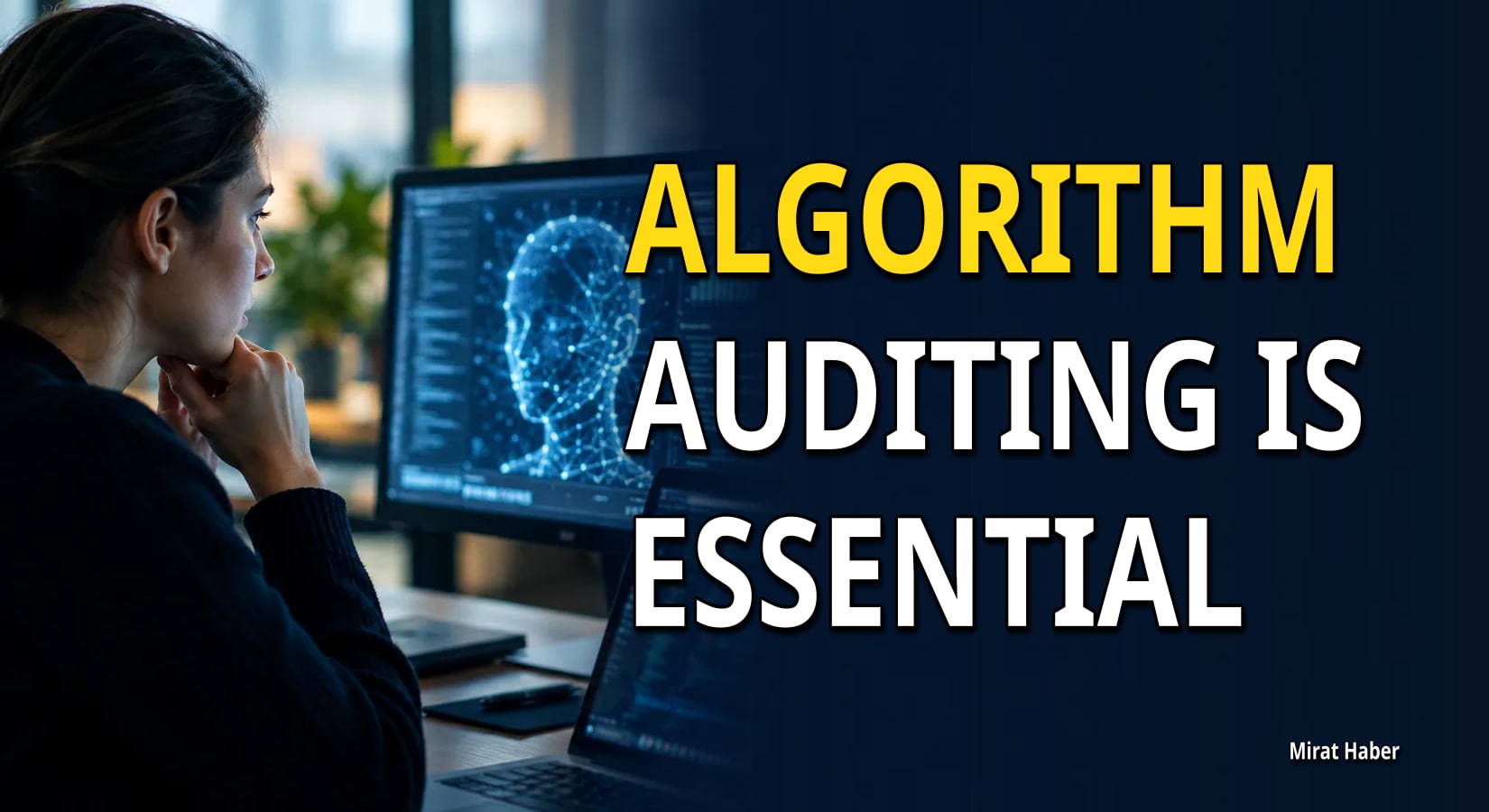
Today, public institutions conduct their financial transactions, decision-making and resource allocation largely through digital systems and algorithms. It is therefore essential to audit not only the results of these processes, but also the algorithms that produce them. A faulty, manipulated or misused algorithm can affect millions of transactions in a short time, causing substantial harm. Detecting these risks in time through traditional file reviews is becoming increasingly difficult.
Yet it is difficult to say that the steps Sayıştay has taken in this field have kept pace with digital transformation or the scale of the need for auditing. Despite the technological tools developed, it has yet to be demonstrated how far a system for comprehensively auditing public institutions’ algorithms has become operational.
When public administration operates through algorithms while auditing lags behind, that in itself constitutes a serious audit gap. Recognizing and closing this gap, and putting the necessary legal changes on the agenda, is first and foremost the responsibility of Sayıştay’s leadership.
On 2 June 2026, at the celebration of the 164th anniversary of Sayıştay’s founding, President Recep Tayyip Erdoğan emphasized the effective and efficient use of public resources and results-oriented auditing. At the same meeting, Sayıştay President Metin Yener also discussed the importance of artificial intelligence and algorithmic auditing.
These speeches show that developing algorithmic auditing is also viewed favorably at the highest level of the state. The President’s remarks provide strong backing for action.
What more should the President do?
It has yet to be demonstrated that Sayıştay has the technical capacity and expertise to audit all the algorithms used by public institutions. There are also certain legal limits on its authority.
A different model must therefore be developed.
Just as building inspection bodies were established in the construction sector, a limited number of independent, accredited algorithm auditing bodies could also be established.
These bodies could examine public institutions’ software, decision-making algorithms and digital transactions, and prepare reports. Sayıştay, in turn, could serve as the higher audit authority that scrutinizes and evaluates these reports and commissions further examinations when necessary.
Of course, lessons must be learned from the negative experiences with building inspections; strict rules must govern these bodies’ independence, expertise, selection and responsibilities. Sayıştay should also be given the authority to audit their activities and initiate the necessary sanctions.
Technical examinations can be outsourced. But Sayıştay’s constitutional responsibility for auditing cannot be transferred.
Current incidents involving investment funds, described by the public as fund robbery, call the effectiveness of financial auditing into question.
What, then, will happen if a major irregularity or loss to the public purse emerges tomorrow at another institution because of transactions carried out through algorithms?
Will only those who carried out the transactions be called to account? Will managers who failed to recognize the risks in time and failed to act to establish the necessary audit mechanisms bear no responsibility at all?
With the President having declared his support for robust, results-oriented auditing, responsibility for delays in taking the necessary steps must also be questioned.
Sometimes the greatest responsibility arises not from doing something wrong, but from failing to do what is needed in time.
As auditing methods using artificial intelligence and data analytics are being developed in the EU and developed countries, Türkiye, too, must move beyond traditional file reviews.
Sayıştay President Yener must now also talk more about results than goals.
How many institutions have had their algorithms audited? What risks were identified? What legal obstacles were encountered? What proposals were submitted to the TBMM to address them?
Sayıştay must prepare a workable model for establishing independent algorithm auditing mechanisms, submit reports to the TBMM setting out the necessary legislative changes and the reasons for them, and follow the process through.
Of course, it is not expected to pass laws. It is expected to put a workable auditing system before the legislature.
It is time to stop talking about algorithmic auditing and establish the auditing mechanism.
Prof. Dr. Mete Gündoğan
Mirat Haber – YouTube
For years, I have had a system in place: my old vehicle’s HGS tolls were…
Once, a voice rose, placing regard for the Truth above all other considerations. Then those…
There is something we hear often these days: “What matters is being a good person.…
Today, we see significant differences between sections of society. These differences can reach the point…
For many years, we had been exploited through interest. In recent days, a fund racket…
The Prophet’s (peace and blessings be upon him) duties concerning revelation can be listed under…