
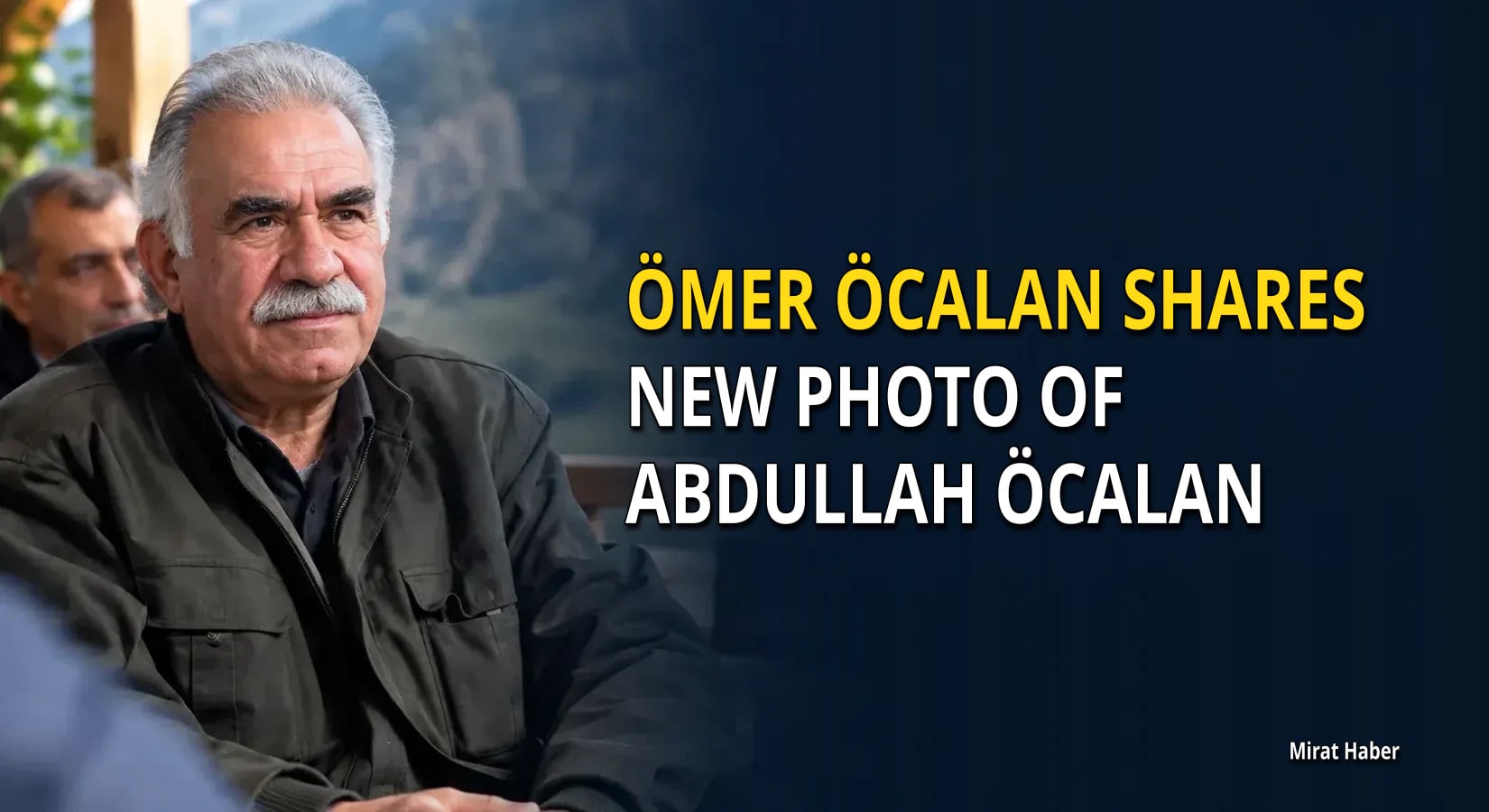
Ömer Öcalan, a DEM Party MP for Şanlıurfa, shared a photograph of PKK leader Abdullah Öcalan on his X account. The post gave no details about the circumstances in which it was taken, while Mezopotamya Agency (MA) reported that it was from a family visit to İmralı for Eid al-Adha. The distinction between the photograph’s recent publication and when it was taken is a key detail in the story.
According to Mezopotamya Agency, the photograph was taken in late May during a family visit to İmralı for Eid al-Adha. The agency identified the people beside Abdullah Öcalan as his cousin Mehmet Reşit Öcalan and his niece or nephew, Asmin Öcalan. The timing and identities therefore come from the agency’s reporting, rather than a detailed explanation by the MP who shared the image.
Diken’s report states that Ömer Öcalan posted the photograph with the caption “Serok (Leader) Abdullah Öcalan.” When Diken called him for information, the MP said: “I’m in a meeting at parliament, I’m busy, I won’t answer.”
For those following the disarmament process, statements about Abdullah Öcalan’s working and living conditions are also significant alongside the photograph. Speaking to Medya Haber TV on 2 November, Mithat Sancar, a member of the DEM Party’s İmralı delegation, said Öcalan had moved to a new residence within the same complex. Sancar argued that the accommodation offered better working and living conditions for the role they envisaged him playing in the process. DEM Party co-chair Tuncer Bakırhan also told his party’s parliamentary group meeting that Öcalan’s working conditions had changed following the move and that his secretariat had been strengthened. These details are reported as statements by the two politicians; they form a separate topic from MA’s information about when the photograph was taken.
Bakırhan argued that law and politics should come to the fore alongside disarmament. He criticised the use of government-appointed trustees, detentions and pressure on the press, saying they harmed the process. His remarks thus addressed not only physical conditions but also the political climate’s effect on the process.
According to the chronology reported by Diken, Abdullah Öcalan called on the PKK to lay down its arms on 27 February 2025 in a text he titled “Peace and Democratic Society.” The PKK announced on 11 July 2025 that it had laid down its arms. That day, 30 members of the organisation burned their weapons in a barrel in Sulaymaniyah, Iraq. Three members of the National Solidarity, Brotherhood and Democracy Commission, established in parliament for the process and representing the AKP, MHP and DEM Party, met Öcalan at İmralı Prison on 24 November 2025. The meeting’s minutes were published on the Turkish parliament’s website on 23 January 2026. The commission adopted its joint report on 18 February; further meetings by the İmralı delegation followed.
The Monitoring and Evaluation Board, established to monitor the process and comprising four subcommittees, held its first meeting on 24 August. Vice President Cevdet Yılmaz chaired the meeting, which was attended by Akın Gürlek, Hakan Fidan, Mustafa Çiftçi, Yaşar Güler, İbrahim Kalın, Hakkı Susmaz and Okay Memiş.
According to Diken, parliament passed the 12-article “Law on Strengthening National Solidarity and Social Integration” on 10 August. The law was published in the Official Gazette on 18 August.
The reported statements express expectations and political demands. Pervin Buldan said Öcalan would serve on a “disarmament and political engagement board,” but no board with that name was announced. One of the bodies announced was called the “Disarmament and Strategic Coordination Subcommission.” On 27 August, Mithat Sancar said they expected Öcalan to serve on the board and were awaiting clarification. On 10 October, Bahçeli argued that Öcalan was entitled to the role of political engagement coordinator. These statements are not presented as a confirmed appointment.
Key facts about the post
When was the photograph taken, and during which visit?
What do the statements about working conditions mean?
From the disarmament call to parliamentary talks
Questions about the process
When was the law concerning the process passed and published?
Has a role for Öcalan on a board been confirmed?