İstanbul
Yağmurlu
22°C
İstanbul
22°C
Yağmurlu
Cumartesi
Hafif Yağmurlu
17°C
Pazar
Parçalı Bulutlu
16°C
Pazartesi
Yağmurlu
19°C
Salı
Az Bulutlu
10°C

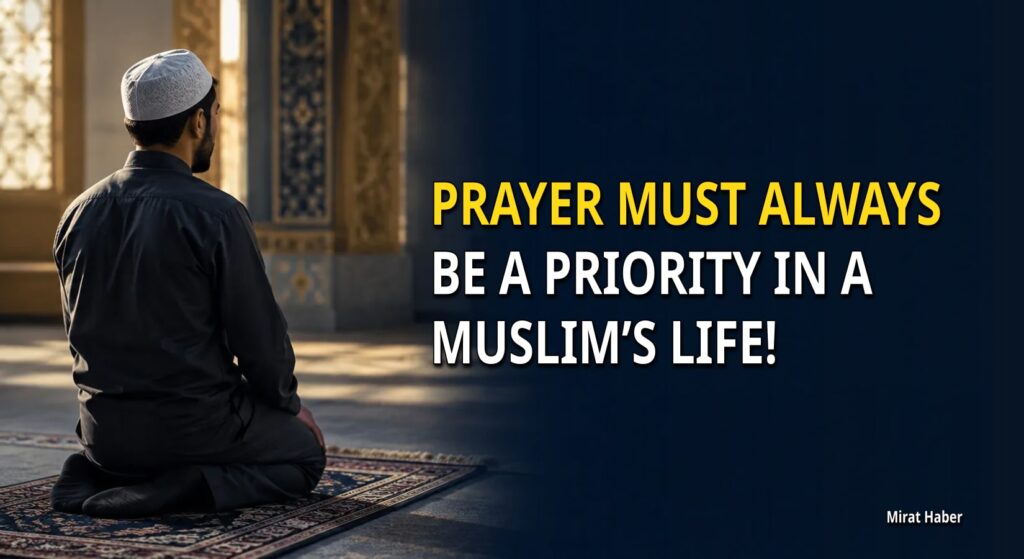
Prayer is no ordinary act of worship in a Muslim’s life. It is certainly not merely a duty to be performed at set times of day and considered done. Prayer is one of the most fundamental acts of worship: it keeps a person’s bond with their Lord alive, strengthens their faith, improves their character and guides their life.
Prayer is part of the divinely revealed religions preached by all the prophets, from the Prophet Adam to our beloved Prophet (peace and blessings be upon him). Of course, the way prayer is performed and the rules governing it have varied over time. Yet worshipping Allah and turning to Him have been the common call of all the prophets.
Gabriel (peace be upon him) taught our beloved Prophet (peace and blessings be upon him) how to perform prayer in Islam. The Messenger of Allah, in turn, demonstrated this act of worship to his companions through his own practice. Indeed, he said:
صَلُّوا كَمَا رَأَيْتُمُونِي أُصَلِّي
“Pray as you have seen me pray.” (Buhârî, Ezân, 18)
Prayer, then, is not an act of worship that everyone may shape according to their own whims. How it is performed, when it is offered and which conditions must be met are established by the sources of our religion.
Despite this truth, claiming that prayer was adopted from polytheists or other religions is a false assertion rooted in ignorance of Islam’s sources. Prayer is a divinely ordained act of worship that Allah commanded believers to perform and that our beloved Prophet (peace and blessings be upon him) taught his community.
Made obligatory as five daily prayers on the night of the Mi‘raj, prayer has been placed at the centre of a Muslim’s daily life. With the institution of the call to prayer during the Medina period, congregational prayer also became an important part of Muslim life.
One of our greatest mistakes today is that, instead of placing prayer at the centre of our lives, we squeeze it into whatever time remains after our other activities.
“Let’s finish this job, then we’ll pray.”
“Let’s work a little longer; you can make up the prayer later.”
“We’re in a meeting now; you can pray later.”
This is precisely where our mistaken attitude towards prayer begins.
A Muslim cannot regard prayer as a burdensome task to get out of the way. On the contrary, a Muslim strives to organise their affairs around prayer times. For prayer is not an obstacle to life, but a divine standard showing us how life should be lived.
Our Lord says:
إِنَّ الصَّلَاةَ كَانَتْ عَلَى الْمُؤْمِنِينَ كِتَابًا مَوْقُوتًا
“Surely prayer is an obligation prescribed for believers at appointed times.” (Nisâ, 4/103)
Faced with such a clear command, we must not allow trade, work, school, meetings or any other occupation to make us forget prayer.
Nor should Muslim homes become places used only for eating, watching television and sleeping. Prayers should be offered and the Qur’an read in our homes, and children should be raised in an atmosphere of worship.
Our beloved Prophet (peace and blessings be upon him) said:
اجْعَلُوا مِنْ صَلَاتِكُمْ فِي بُيُوتِكُمْ، وَلَا تَتَّخِذُوهَا قُبُورًا
“Offer some of your prayers in your homes. Do not turn your homes into graves.” (Buhârî, Salât, 52; Müslim, Müsâfirîn, 210)
In other words, we must not turn our homes into places devoid of worship, remembrance of Allah and spiritual life.
To understand the importance of prayer, we need only look at the warnings in the Qur’an and the Sunnah.
Our beloved Prophet (peace and blessings be upon him) said:
الْعَهْدُ الَّذِي بَيْنَنَا وَبَيْنَهُمُ الصَّلَاةُ، فَمَنْ تَرَكَهَا فَقَدْ كَفَرَ
“The covenant between us and them (the disbelievers) is prayer. Whoever abandons prayer has fallen into disbelief.” (Tirmizî, Îmân, 9)
There is, however, an important point of Islamic jurisprudence here: scholars have offered different interpretations of the legal implications of the expression “falling into disbelief” in this hadith.
The well-known position in the Hanbali school: The accepted view is that someone who abandons prayer entirely, while acknowledging that it is obligatory, falls into disbelief.
In the Hanafi, Maliki and Shafi‘i schools: Unless a person denies that prayer is obligatory, abandoning it out of laziness constitutes a grave sin, but does not in itself mean that the person has left the faith.
Thus, this hadith makes clear the defining place of prayer in Muslim identity. Nevertheless, Islamic scholars disagree over whether a person who abandons prayer out of laziness falls into disbelief. The hadith must therefore be considered with these differences of legal opinion in mind.
Yet there is one truth on which all scholars agree: abandoning prayer is a grave sin and must never be treated lightly.
No Muslim, then, should deceive themselves by saying, “My heart is pure; it doesn’t matter if I don’t pray.” Purity of heart is not independent of fulfilling Allah’s commands.
Prayer is not an act of worship performed only at home or in the mosque. Muslims spend a substantial part of their day at work, at school, in factories, in hospitals, on the road or in meetings.
What, then, is someone who wishes to pray supposed to do?
Workplaces need suitable spaces for prayer, working hours should be arranged with prayer times in mind, and the need to worship should be taken into account during meetings and travel.
These measures do not give anyone special privileges. They respect people’s right to practise their religious beliefs and perform their acts of worship.
Our Lord tells us that trade and commerce must not keep people from prayer:
رِجَالٌ لَا تُلْهِيهِمْ تِجَارَةٌ وَلَا بَيْعٌ عَنْ ذِكْرِ اللَّهِ وَإِقَامِ الصَّلَاةِ وَإِيتَاءِ الزَّكَاةِ
“There are men whom neither trade nor commerce distracts from remembering Allah, performing prayer properly and giving zakat.” (Nûr, 24/37)
This verse gives us all an important standard: worldly affairs must not take precedence over our responsibilities towards Allah.
This is one of the matters we truly need to reflect on.
We pray, yet we are dishonest in our business dealings. We pray, yet we disregard the rights of others. We pray, yet we show no compassion to our families. We pray, yet we do not stop lying, acting unjustly or deceiving people.
Where, then, is the change that prayer should bring about in our lives?
Our Lord says:
إِنَّ الصَّلَاةَ تَنْهَىٰ عَنِ الْفَحْشَاءِ وَالْمُنْكَرِ
“Surely prayer restrains people from indecency and wrongdoing.” (Ankebût, 29/45)
Prayer, then, is not merely placing one’s forehead on the ground in prostration. It means keeping one’s hands from what is forbidden, one’s tongue from lies, one’s eyes from what is forbidden and one’s heart from arrogance.
Positive changes should be evident in the character, business dealings, family life and personal relationships of someone who prays.
Of course, someone who prays is not without fault. Yet prayer calls people to turn away from their mistakes and reform themselves.
Prayer teaches us not to remain silent in the face of injustice, to stand with the oppressed, to defend what is right against the oppressor and not to compromise for personal gain.
A Muslim cannot stand before Allah in prayer while placing their life at the service of ideas that contradict Allah’s commands. In shaping their beliefs, character and standards for living, they must give priority to the Qur’an and the Sunnah.
A right-wing, left-wing, liberal, secular or any other ideological identity must not take precedence over a Muslim’s faith and religious principles. A Muslim should draw their identity not from ideologies, but from revelation.
Prayer is a Muslim’s identity. Five times a day, we come before our Lord and declare that we are His servants. But when we return to our lives after prayer, do we also fulfil the duties that being His servants entails?
Do we seek Allah’s pleasure in our homes, our work, our business dealings, our politics and our family relationships?
Let us not forget: prayer is not an act of worship that begins in the mosque and ends when we leave it. The awareness of being Allah’s servants that prayer instils in us must be reflected in every area of life.
If we pray, our character must be good too. If we worship, we must also be just. If we prostrate ourselves, we must also show compassion. Our heads, which bow before our Lord, must not bow to injustice at the hands of others.
For prayer is not merely standing and prostrating before Allah; it is also living a life that pleases Him after we rise from His presence. Those who declare in prostration that they are servants of Allah must not turn their backs on His commands in any area of life.
Kadir Bekil
Mirat Haber – YouTube