
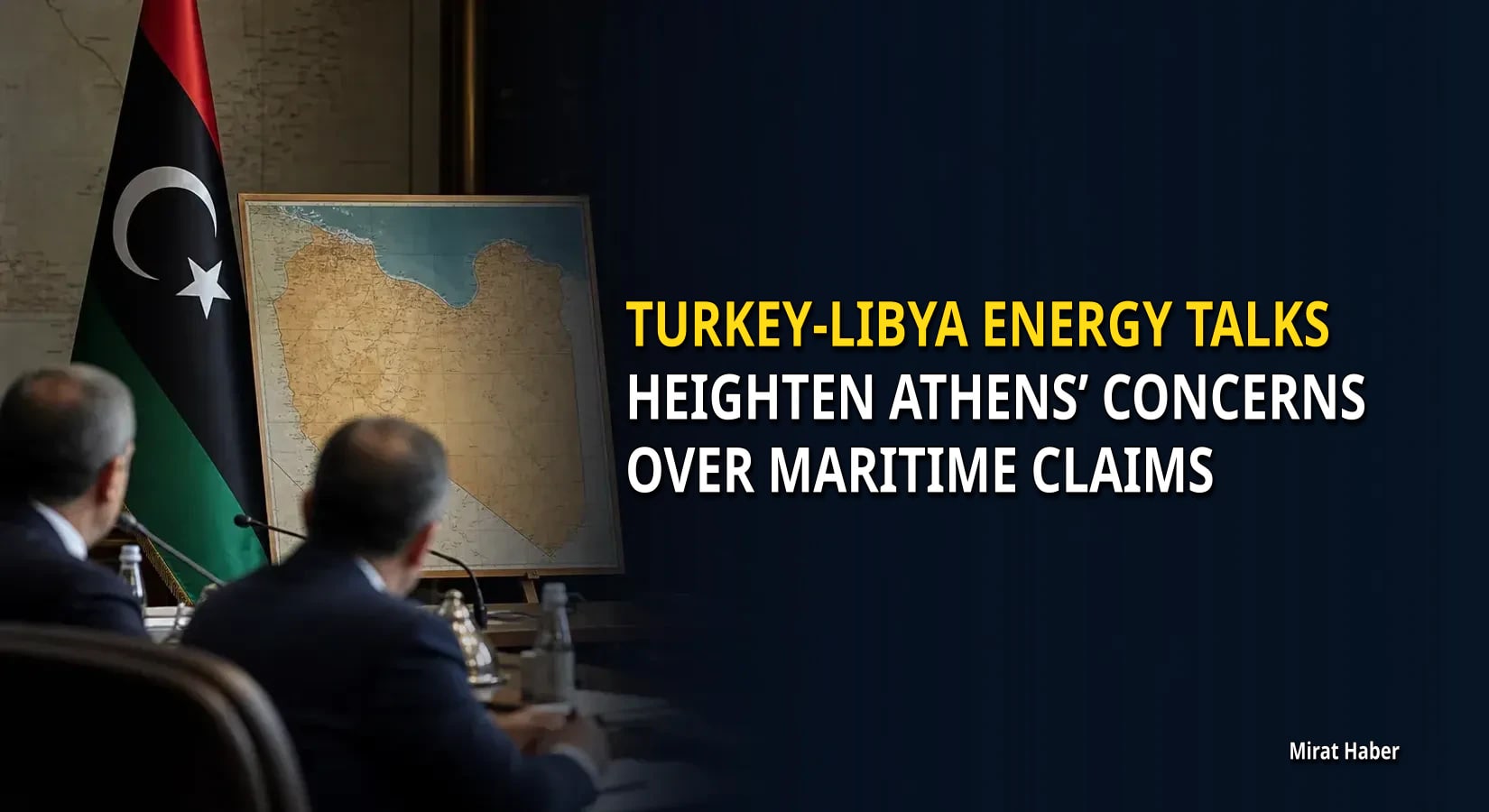
Libya’s National Oil Corporation is in talks with a consortium that includes TPAO about exploration activities scheduled to begin in the second quarter of 2027. According to Hürriyet, Greece is concerned about deepening Turkey-Libya energy cooperation and the prospect of new activities in areas where the two countries’ maritime claims overlap with its own.
Key points from the talks
Athens’ concerns extend beyond energy
The report attributes Greece’s unease to more than exploration activities. It says Turkey’s growing influence in both western and eastern Libya is challenging the balancing policy Athens has pursued for years.
The report also presents the view that Libya has moved entirely into Ankara’s camp as the Greek government’s assessment. This describes how Greece interprets developments, rather than independently establishing the positions of all actors in Libya.
Hürriyet also reports that President Recep Tayyip Erdoğan will visit Tripoli on December 8–9 for the first time in 15 years. The anticipated visit is cited as another development adding to Athens’ unease.
Why do the energy talks matter?
Progress in the talks should therefore not be confused with the start of exploration. The process described remains at the discussion stage, while the timetable refers to a planned start. The prospect of energy cooperation moving into practice is one of the key issues shaping Athens’ diplomatic position.
Frequently asked questions
When is exploration scheduled to begin?
According to the timetable reported by Hürriyet, exploration is scheduled to begin in the second quarter of 2027. Libya’s National Oil Corporation is holding talks with a consortium that includes TPAO about these activities.
What diplomatic options is Greece considering?
According to the report, Athens is caught between trying to preserve relations with Libya and pressing for EU sanctions. These options are presented as part of its policy response to closer Turkey-Libya ties.