İstanbul
Yağmurlu
14°C
İstanbul
14°C
Yağmurlu
Çarşamba
Çok Bulutlu
17°C
Perşembe
Hafif Yağmurlu
17°C
Cuma
Hafif Yağmurlu
17°C
Cumartesi
Hafif Yağmurlu
15°C

Ali Rıza Demircan explores the Islamic duty to want for others what we want for ourselves.
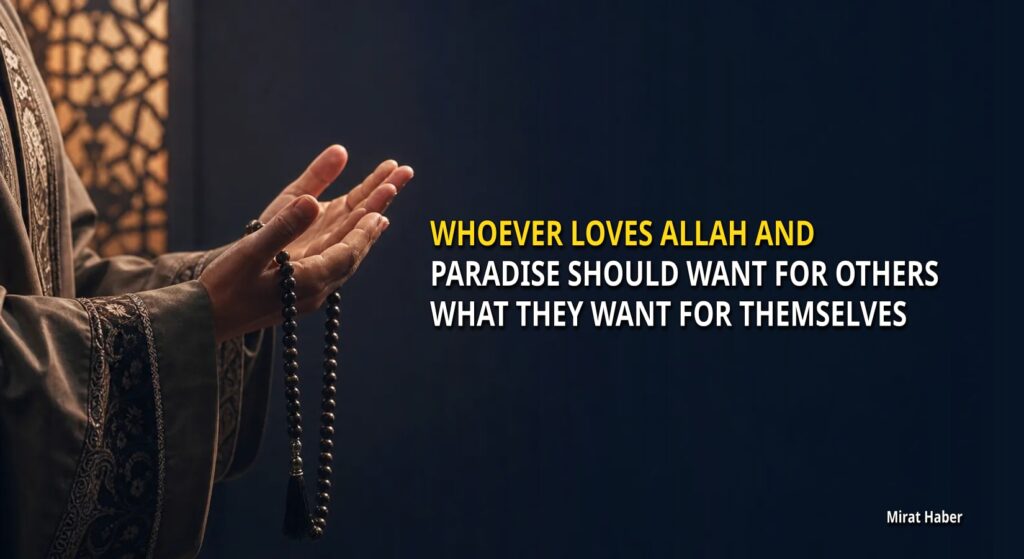
Ali Rıza Demircan writes about the Islamic duty to want for others what we want for ourselves.
Human beings are social creatures. To live comfortably and happily, we need to love and be loved by the people around us, especially our families, and to give and receive help.
Islam offers principles for human happiness in this world and the hereafter. Through its teachings, it shows us particular ways to love and be loved, and to help and be helped. In addition, it has set out a general principle that even those with no formal education can follow.
This sacred principle is to want for others what we want for ourselves, and not to wish on others what we would not wish for ourselves.
“To love for all other people what one loves for oneself” is a profound virtue a person can possess.
This principle offered by Islam is a miraculous rule that will prevent destructive words, behaviors and deeds, put an end to disputes, and bring people closer together.
Putting this principle into practice—whose value reason recognizes—clearly requires moral virtues such as tolerance, justice and self-sacrifice.
Since only someone who believes in Allah and the hereafter can consistently put this sacred principle into practice, Islam does not merely recommend it and leave it at that.
Our religion presents “wanting for other people what we want for ourselves” as a foundation of faith: evidence of true belief, the height of virtue and a path to Paradise.
My dear brothers,
Let us turn to our Prophet’s hadiths to learn the importance and nobility of wanting for others what we want for ourselves. Learning it directly from its source will deepen our desire to put it into practice.
– Hz. Cerîr (r.a.) relates:
A man came to Allah’s Messenger (s.a.) and asked him about the foundations of Islam. Allah’s Messenger (our Prophet) explained:
“You bear witness that there is no god other than Allah and that Muhammad is Allah’s prophet, perform the prayer, give alms, observe the Ramadan fast, love for other people what you love for yourself, and do not love for them what you do not love for yourself.” (M. Zevâid, 1/45)
– Ebû Hüreyre narrates:
The Prophet asked the companions who were with him:
“Who among you would like to learn these teachings from me, put them into practice, and teach them to someone who will act on them?” When he asked this, I came forward:
“I want to learn them, O Messenger of Allah!” I said. The Prophet of Allah took my hand and taught me these truths in five points:
– From Muâz Ibn Cebel (r.a.):
Hz. Muâz asked our Beloved Prophet (s.a.) about what is required by the highest degree of faith. The Prophet replied:
“What this highest degree requires is that you love for Allah’s sake, hate for Allah’s sake, and keep your tongue occupied with the remembrance of Allah.”
Hz. Muâz asked again:
“O Messenger of Allah! (In addition to the deeds you have recommended,) what else do you advise me to do?”
“O Muâz! I advise you to love for all people what you love for yourself, and not to desire for them what you do not desire for yourself.” (M. Mesâbîh, Hadith no. 48)
– Hâlid Ibn Abdullah reports that his grandfather related:
Allah’s Messenger (s.a.) asked me:
“Do you love Paradise?”
“Yes, (O Messenger of Allah, I do.)”
“Then love for your fellow believers what you love for yourself.” (M. Zevâid, 8/186)
I pray to my exalted Lord to raise all of us to the ranks of those virtuous servants who want for others what they want for themselves, and I end our sermon with a verse:
“Let not those among you who possess virtue and wealth reduce or cut off the help they give to relatives, the poor, and those who have emigrated for Allah’s sake. Let them be forgiving and act with tolerance. Do you not love that Allah should forgive you? Allah is Gafûr and Rahîm; His forgiveness and mercy are abundant.” (Nûr, 24/22)
Ali Rıza Demircan
Please follow this link to read more articles by this author.
Mirat Haber – YouTube