İstanbul
Az Bulutlu
17°C
İstanbul
17°C
Az Bulutlu
Pazartesi
Yağmurlu
19°C
Salı
Az Bulutlu
9°C
Çarşamba
Parçalı Bulutlu
9°C
Perşembe
Az Bulutlu
12°C

Verse 13 of Surah Al-Hujurat reads:
“O humankind, We indeed created you from male and female, and made you peoples and communities so that you might know one another. Surely the most exalted among you in the sight of Allah is the most pious among you. Surely Allah knows and is aware.”
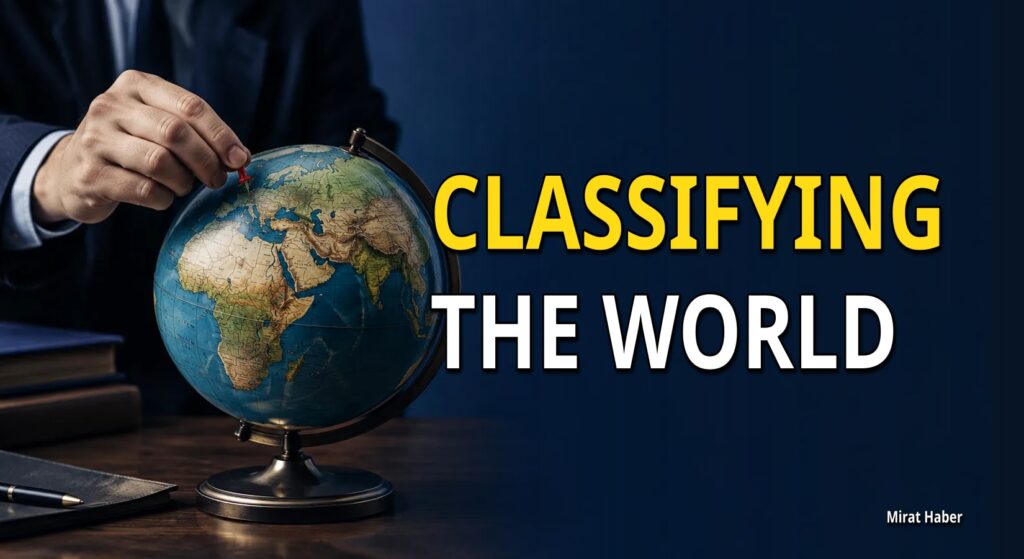
Knowledge is classification. Knowledge is knowing oneself. To understand itself, a being begins by getting to know its constituent parts. The Muslim ummah is no exception.
More than two billion people around the world are Muslim, whether by religious practice or cultural identity. They are spread across 150 countries, 50 of which have Muslim majorities. We speak thousands of different languages and dialects.
We Muslims have different customs, sects, understandings of Islamic history, beliefs and hadiths. Allah has made all of these different, making only the Quran unchangeable. We cannot change it even if we wish to. The eternal common ground, the fixed point for two billion people, is the Holy Quran.
It is not easy to classify Muslims by region. Everyone may offer different ideas. If we limit the number of categories in this classification to five, we can speak of five regions of Islamic countries in terms of language, culture, history and politics, along with a region of minorities.
This is a vast region with an exceptionally rich cultural fabric, home to the greatest concentration of Muslims and subject to the British Empire until 1947. It is also known as South Asia. Although it has the greatest concentration of Muslims, Islam is a minority religion here.
Muslims: ~ 650m / two billion
Islamic Countries: Pakistan, Bangladesh, Afghanistan, the Maldives
Other Countries: India, Sri Lanka, Nepal, Bhutan
Major Languages: Urdu/ Hindi; Bengali, Persian, Pashto, Punjabi, Tamil, Telugu, Malayalam
The most distant region, lying furthest east in relation to our province of Çorum, the centre of gravity of the world’s landmass, is a rich expanse of islands and peninsulas, again encompassing enormous diversity. It is also home to the world’s largest Islamic country, and some of its territories, such as Aceh, remained Ottoman lands until the 20th century. It used to be known as Indochina.
Muslims: ~ 350m / 650m
Islamic Countries: Indonesia, Malaysia, Brunei Darussalam, the Cocos Islands
Other Countries: the Philippines, Vietnam, Thailand, Myanmar, Cambodia, Laos
Major Languages: Bahasa (Malay/ Indonesian), Telugu, Vietnamese, Thai, Burmese
The birthplace of human history, agriculture, civilisation, the Abrahamic religions and Islam, this region has the highest proportion of Muslims, lies at the centre of the world’s landmass and contains the Two Holy Sanctuaries. It is undoubtedly the most important focal point for both Islam and humanity. It is also known as the Middle East and North Africa.
Muslims: ~ 600m / 650m
Islamic Countries: Egypt, Iran, Türkiye, Saudi Arabia, Yemen, Iraq, Morocco, Algeria, Chad, Sudan, Syria, Azerbaijan, Palestine, Tunisia, Mauritania, Western Sahara, Libya, Oman, Jordan, Lebanon, the UAE, Kuwait, Bahrain, Qatar, Northern Cyprus, Djibouti
Other Countries: Israel, Georgia, Armenia, Southern Cyprus
Major Languages: Arabic, Persian, Turkish
This is a critically important continental region where the Muslim population appears small among East Asians and Russians, yet which carries enormous weight in Islamic and Turkish history. Its strategic value and resources have made it a focus of struggles both in the past and in our own time.
Muslims: ~ 150m / 2 billion
Islamic Countries: Uzbekistan, Kazakhstan, Kyrgyzstan, Turkmenistan, Tajikistan
Other Countries: China, Russia, Japan, South Korea, Taiwan, Ukraine, North Korea, Belarus, Mongolia
Major Languages: Chinese, Russian, Karluk, Kipchak, Oghuz, Siberian and Oghur Turkic dialects, Japanese, Korean, Mongolian, Persian
This is the region with the fastest population growth, where the greatest concentrations of both the world’s Muslims and Christians will be found in a few generations. Despite its young and dynamic population, continuing Western exploitation stands in the way of its development.
Muslims: ~ 400m / 1 billion
Islamic Countries: Nigeria, Senegal, Mali, Chad, Niger, Burkina Faso, Equatorial Guinea, Ivory Coast, Somalia, the Gambia, the Comoros… In many countries, the proportion of Muslims has been artificially understated since the colonial era.
Other Countries: Ethiopia, Congo-Kinshasa, South Africa, Tanzania and the rest of the 45 countries of sub-Saharan Africa
Major Languages: Swahili, Arabic, Amharic, Hausa, Yoruba, Mandinka, Somali, other Bantu languages, other Afro-Asiatic languages
These are lands with the lowest proportion of Muslims, which control a large share of the world economy, are the source of oppression against Muslim societies, harbour and nourish global Zionism, and where Islamophobia has permeated society.
Muslims: ~ 40m / 1.5 billion
Islamic Countries: Bosnia and Herzegovina, Albania, Kosovo, and the OIC members with Muslim minorities: Suriname, Guyana, Trinidad and Tobago
Other Countries: the countries of Europe, North and South America, and Oceania
Major Languages: English, Spanish, Portuguese, French, German
If we approach the world through this classification—as the Centre, the Indian subcontinent, Southeast, Asia, Africa and the West—we can more easily take regional steps towards Islamic unity. If we adopt Arabic, Urdu, Bahasa, Common Turkic and Swahili as the shared languages of these regions instead of Western languages, much faster integration becomes possible.
Prof. Dr. Kutluk Özgüven
Mirat Haber – YouTube