
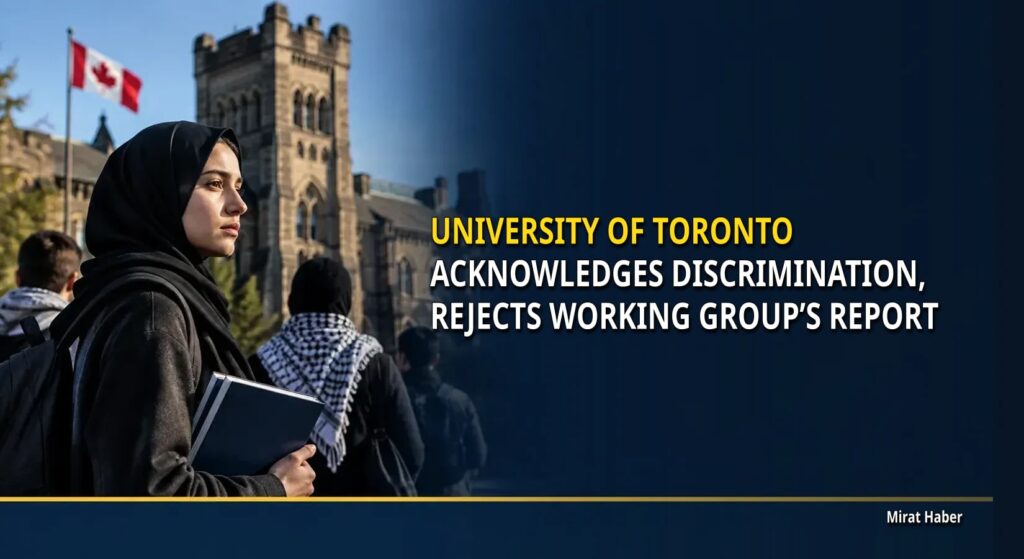
The University of Toronto in Canada acknowledged that its Muslim, Arab and Palestinian community members had faced discrimination, but rejected a report and recommendations prepared by an internal working group. The gap between the report, which examined practices ranging from student events to complaints handling, and the administration’s response has brought the question of how to tackle discrimination on campus into focus. The report states that events and talks organised by Muslim and Arab students were restricted, complaints were not handled consistently, and double standards were applied to protests and poster displays. The working group presents these findings as the results of its research into combating discrimination against Muslim, Arab and Palestinian members of the university community, and makes recommendations to the university. Another criticism in the report concerns academic activities. The working group argues that the university makes an exception to its institutional commitment to radical and critical teaching and research when it comes to Palestine. The report also states that original research and public awareness activities addressing the interests of Muslim, Arab or Palestinian community members have been treated as antisemitism warranting disciplinary action. These are findings and assessments set out by the working group in its report. The statement said: “We also anticipate that parts of the report could hurt and upset other members of our community, including our Jewish and Israeli colleagues and students.” Anver Emon, the report’s author and chair of the working group, told the Canadian Press in an interview that the university had “outright rejected” the report. Emon said he found it “interesting” that the administration’s response referred to the report’s potential impact on Jewish and Israeli members of the university community. For researchers and university community members engaged in public awareness work, the central issue is how activities relating to Palestine are assessed. The administration has not accepted the working group’s criticisms and proposed solutions in this area. Acknowledging that discrimination exists therefore does not amount to a decision to implement the report’s recommendations. Pro-Palestinian demonstrations on campus had previously been the subject of court proceedings. In July, a court in the Canadian province of Ontario ordered the removal of tents erected by demonstrators on the University of Toronto campus. Following the ruling, supporters of Palestine removed the tents to “avoid police violence”. No. The university acknowledged that its Muslim, Arab and Palestinian community members had faced discrimination; what it rejected was the working group’s report and recommendations. The report, approximately 300 pages long, is based on survey research conducted by the university’s working group between March 2025 and January 2026.Key points of the decision
Which practices does the report challenge?
The administration’s response and the report author’s objection
What does this mean for students and researchers?
Frequently asked questions
Did the University of Toronto deny that discrimination had occurred?
What period does the research underlying the report cover?
İstanbul
Az Bulutlu
21°C
İstanbul
21°C
Az Bulutlu
Cumartesi
Yağmurlu
20°C
Pazar
Çok Bulutlu
14°C
Pazartesi
Parçalı Bulutlu
15°C
Salı
Hafif Yağmurlu
16°C