İstanbul
Yağmurlu
22°C
İstanbul
22°C
Yağmurlu
Cumartesi
Hafif Yağmurlu
17°C
Pazar
Parçalı Bulutlu
16°C
Pazartesi
Yağmurlu
19°C
Salı
Az Bulutlu
10°C

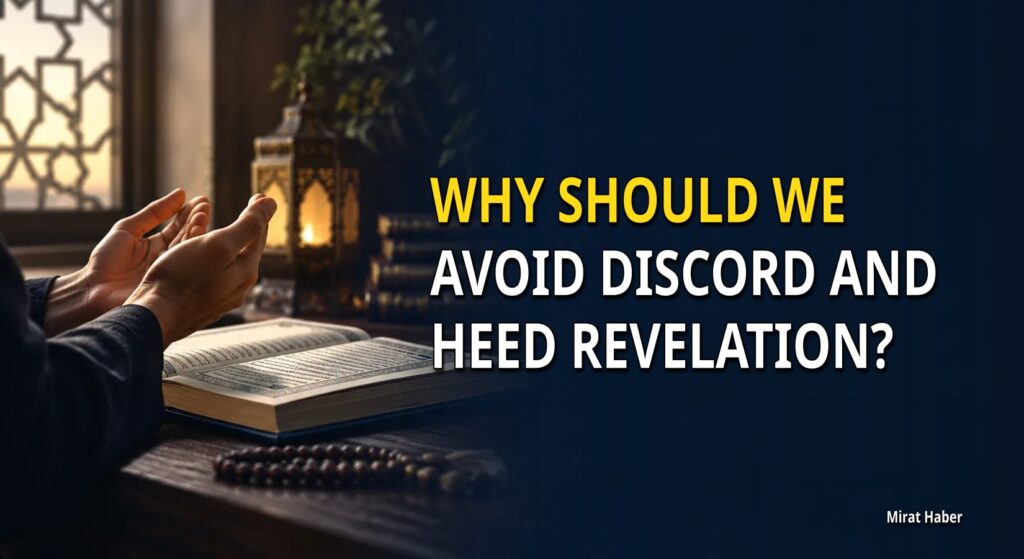
This article examines the harmful consequences of distancing oneself from the truth, focusing on verses 119–120 of Surah Hûd. It also explores how knowledge of history—especially history as recounted in revelation—helps societies live in ways that bring happiness in this world and the hereafter. Drawing on these verses and taking the history of Qur’anic interpretation into account, the aim is to point the way towards becoming people encompassed by Allah’s mercy, finding peace of heart and bringing out the goodness in our innate nature. In discussing verse 120 of Surah Hûd, the article adopts Rudi Paret’s (1901-1983) parallel passages method, which considers related Qur’anic passages together on the basis of their linguistic and thematic similarities.[1]
Those to whom Almighty Allah shows mercy do not fall into religious discord; rather, they agree on the truth: “Except those to whom your Lord has shown mercy. Indeed, your Lord created them for this. Your Lord’s word, ‘I will surely fill Hell entirely with humans and jinn,’ has been fulfilled.” (Hûd 11/119). Those who agree on the truth do not regard differences in their languages and colours as a problem. They do not associate partners with Allah, and they regard believers as brothers and sisters. These people hope to be rewarded with Paradise in the hereafter. Disagreement among people is a fact of life. The ideal is to be able to unite around the truth. Mercy rests upon the community—coming together in truth—not upon division. Muslims do not, after all, seek out as much disagreement as possible so that mercy may properly descend upon them. Agreement on the truth—that is, embracing Allah’s path—is granted to those suited to this level of servitude to Allah. Disbelievers cannot rise to this level because they follow Satan’s path. As far as can be understood from the verse, jinn who turn away from the truth will enter Hell just as humans will. Their having been created from fire does not prevent them from suffering torment in Hell. Some have also interpreted the disagreement in the verse as the difference between poverty and wealth. According to this interpretation, those to whom Allah shows mercy are those who are content with what they have. For they have received mercy whether their material means are limited or abundant.
Prophets, too, need moral support. Revelation takes this need into account: “We recount to you every story of the prophets through which We will (satisfy and) reassure your heart. In this, knowledge of the truth has come to you, and counsel and a warning to the believers.” (Hûd 11/120). Knowledge of history brings peace, because people facing problems see that similar problems existed in the past and benefit from the experience of resolving them. Knowing about people who faced similar problems and remained patient lessens the impact of adversity. The most reliable form of this knowledge is history as recounted in revelation. This history tells of the good being supported by Almighty Allah and the wicked being punished. Such knowledge strengthens the hearts of prophets and believers on the path of truth. It makes it easier to endure hardships patiently on that path. The word “this” in the verse may refer either to the Qur’an or to Surah Hûd. If it is understood to mean the Qur’an, the “knowledge of the truth” contained in it may refer either to Surah Hûd or to prophethood. If Surah Hûd is understood to be the intended reference, the point would be that it is perhaps the surah that deals most extensively with sunnat Allah, the divine law governing societies. Another possibility is the interpretation that, among the Qur’anic verses, which are true, the truth of this surah’s verses is more evident. In that case, particular attention is being drawn to this surah. This is like the separate mention of the “middle prayer” when speaking of the need to observe prayers regularly (al-Baqarah 2/238), or the separate mention of Michael and Gabriel in a passage about angels (al-Baqarah 2/98). Likewise, the statement that counsel (remembrance) and a warning have come to believers through revelation is made because they benefit from both. Otherwise, revelation is counsel and a warning for all people, including believers. Revelation serves as counsel in the sense that it brings out the goodness inherent in our nature and reminds us of it. The verse first speaks of “reassuring the heart” and then of revelation being truth, counsel and a warning, because a person’s heart must first be firm and steadfast in religion in order to benefit from these three qualities of revelation.
As we have seen, verses 119 and 120 of Surah Hûd present agreement on the truth, rather than discord, as the key to gaining Allah’s mercy. Differences in languages and colours should not pose a problem, because unity and brotherhood among believers should take precedence. Revelation also gives moral support to the Prophet (peace be upon him) and believers, offering an account of history full of lessons. This historical knowledge helps people learn from the experiences of those who faced similar difficulties.
[1] Hüseyin Polat, Qur’an and Tafsir Studies by German Orientalists (The Case of Rudi Paret) (Elazığ: Fırat Üniversitesi, Institute of Social Sciences, Basic Islamic Sciences, Master’s Thesis, 2021), 78.
Murat Kayacan
Mirat Haber – YouTube